
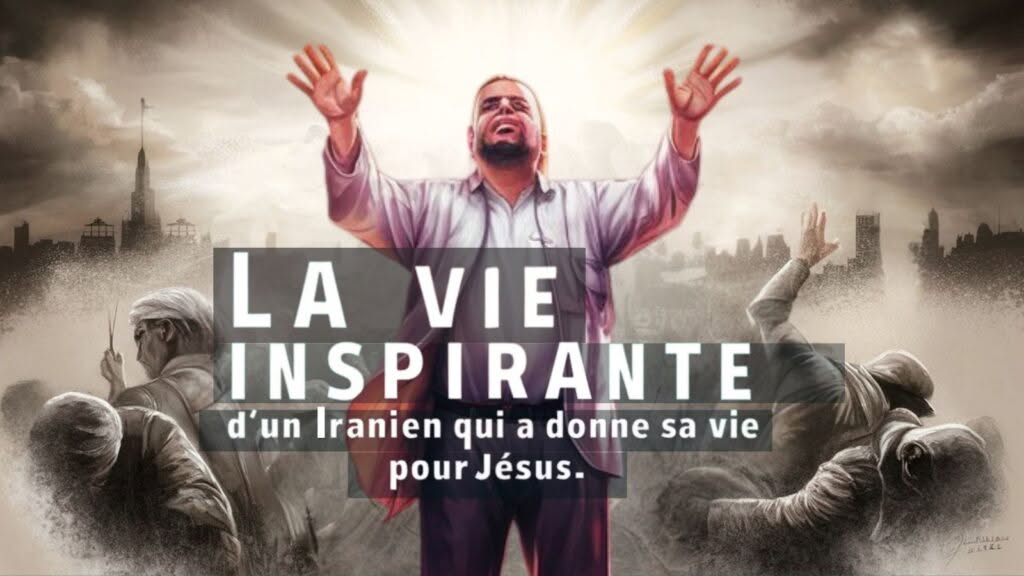
There are men whose courage in the face of adversity testifies to the depth of their faith and the intrinsic value they place on the Gospel. Faced with a Western Christianity that shrinks before the sneers and harassment of the impious and atheists, it is important to examine the cases of people who fully embraced their faith. They faced circumstances far more difficult than mere mockery. Haik Hovsepian was one of these men, and thirty years later, his story still inspires us.
Born in 1945, he felt God's call to evangelize Muslims early on and worked with an Assemblies of God missionary couple. Despite the death of his six-month-old baby and the missionary couple's three children in a car accident, they remained committed to God's work. He planted a church in a predominantly Islamic region and endured attacks from those who opposed it. The 1979 Islamic Revolution plunged the country into radical fundamentalism. All Christian literature in Farsi (the national language), including the Bible, was banned. A new era of repression began.
Despite the danger, Hovsepian continued his work with determination. Unlike the Armenian and Coptic churches, the Assemblies of God congregations were composed primarily of converted Muslims. This was a difficult situation, as churches were now forbidden from accepting Muslims into their services or as members. He became general superintendent of the Assemblies of God and was elected president of the Association of Protestant Churches in Iran when the churches decided to join forces. He worked tirelessly to strengthen the faith of Christians during these dark times and continued to evangelize.
The Iranian state, despite its repression, demanded that churches sign a document affirming their full constitutional rights. But Hovsepian refused to sign it and detailed in a document the rights violations and repression inflicted on Christians. He demonstrated his extraordinary courage when one of the brothers, Pastor and former Muslim Mehdi Dibaj, accused of apostasy, was sentenced to death. Pastor Dibaj had already spent several years in prison. Boldly, Hovsepian publicized this injustice, calling for international support. This gesture attracted worldwide attention and support. Already sentenced to death, the regime was forced to back down and release him. Everyone felt they were not going to let what, for them, was a public humiliation go unpunished.
Indeed, three days after this victory, Pastor Hovsepian disappeared. The authorities claimed to have no information about him. Two weeks later, his son was summoned to the morgue to identify what could be his body. After looking through several photos of the dead, he could not find his father. But just before leaving, they handed him another photo; it was his father. The family asked for his body to be buried with dignity in a Christian funeral. They discovered that he had been brutally murdered, stabbed 26 times. An international funeral was held in different countries. He was 49 years old.
A video by Mehdi Dibaj after Hovsepian's death showed his dismay, gratitude, and emotion at this disappearance, which he believed was linked to his fight for his own freedom. Tragically, a few months later, he himself disappeared and was found murdered. Hovsepian's successor suffered the same tragic fate. The reign of terror continued, with the authorities constantly denying any involvement, which was obviously false.
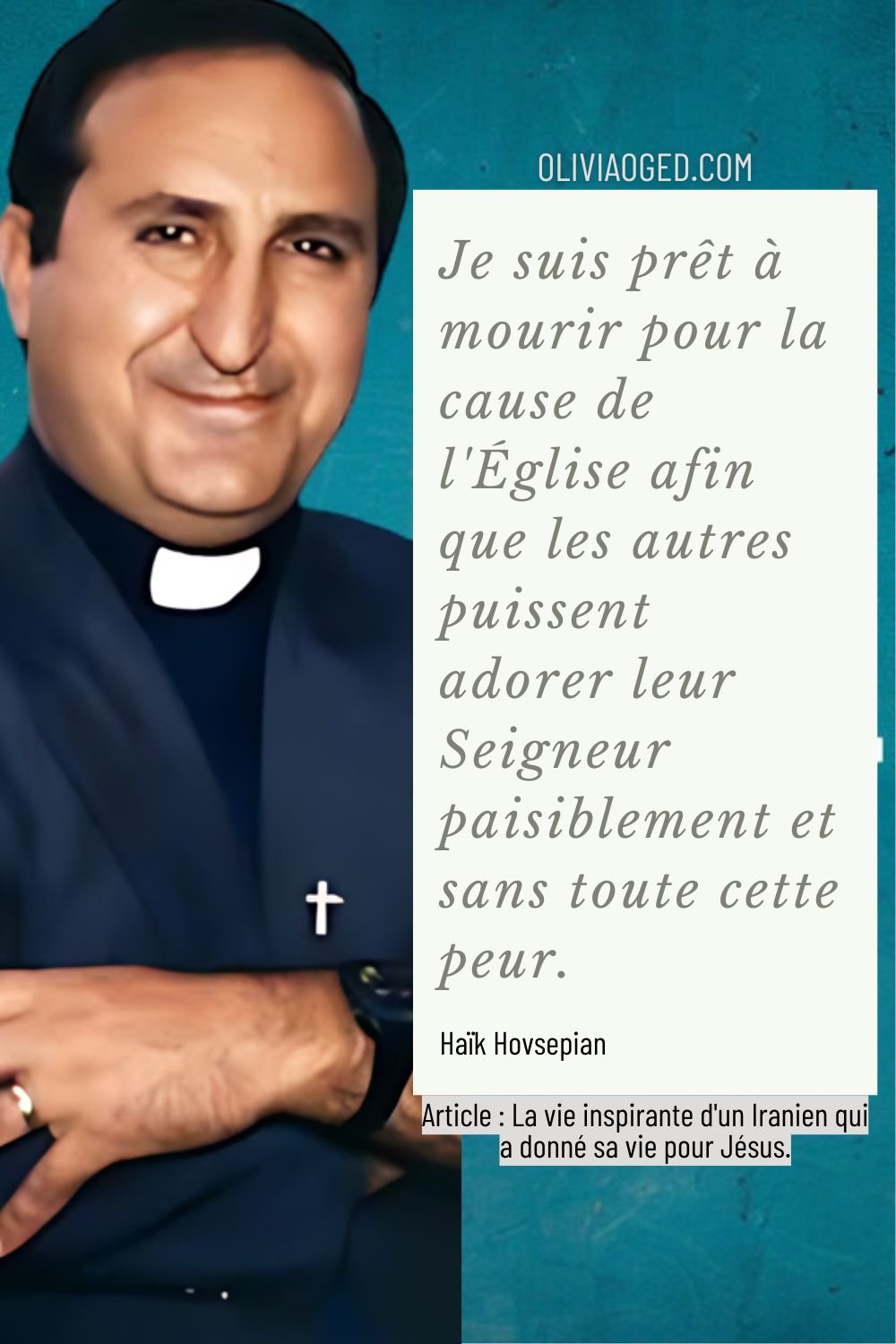
I am ready to die for the cause of the Church so that others may worship their Lord peacefully and without all this fear.' Haik Hovsepian. Share on XIt is important to talk about such men today. The apostle Paul, faced with persecution, lived by the principle that 'my life matters little to me, as long as I can continue to preach the gospel.' Haik Hovsepian was deeply convinced of this. Unlike many who capitulated to the demands of the Islamic regime to avoid trouble, he remained steadfast, prioritizing his mission to preach the gospel over his own safety. He reportedly wrote in a letter the day before his death, 'I am prepared to die for the cause of the Church so that others may worship their Lord peacefully and without all this fear.'
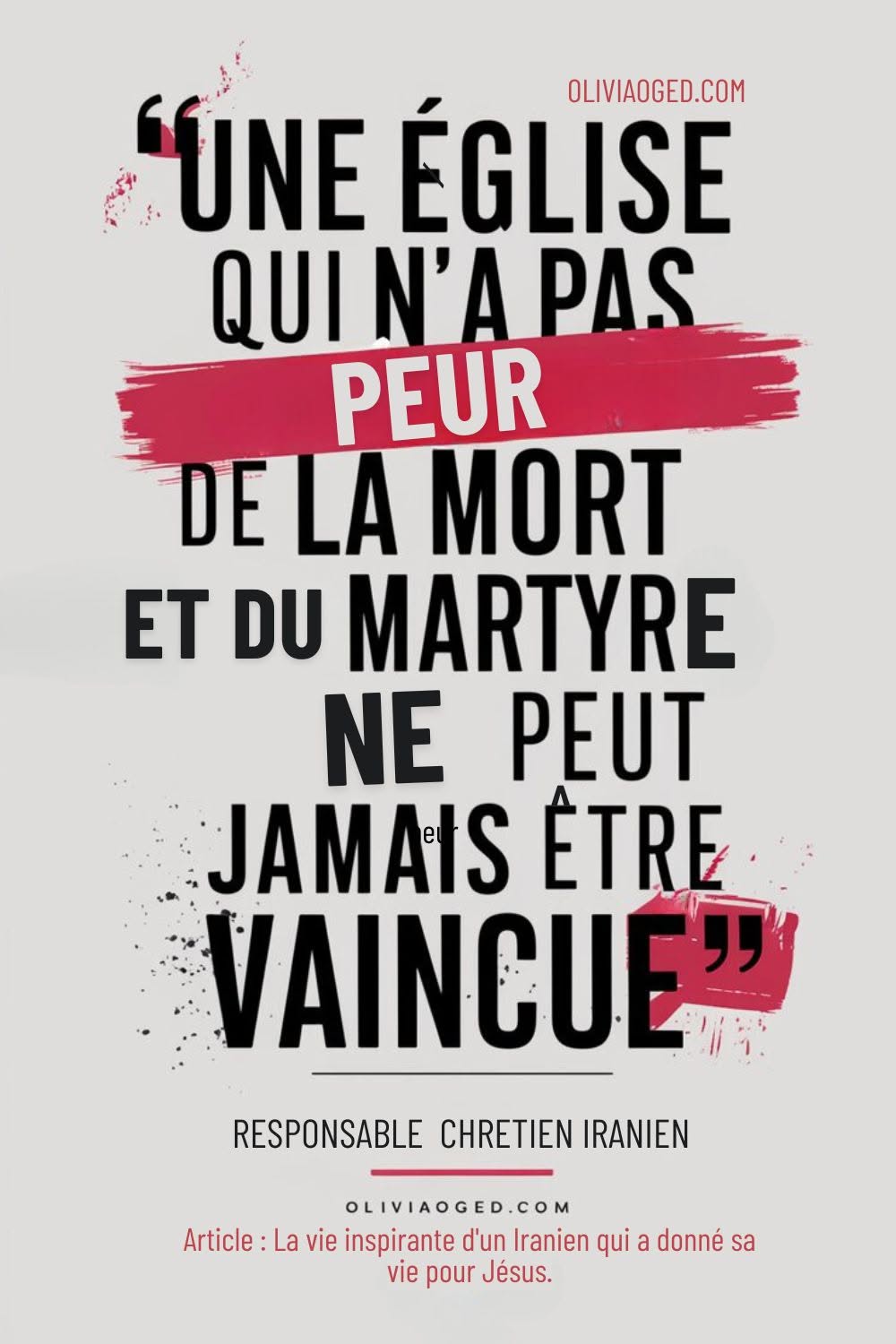
The deaths of Pastor Hovsepian and others did not extinguish the fire of Iranian Christians, far from it. One of the pastors said this: “The impact of Haik’s martyrdom, as our leader, on us, on others, was that we were also willing to give our lives for the Gospel and for the cross. One would have thought that people would become discouraged. Quite the contrary, his courage in the face of death strengthened their resolve rather than discouraging them.” Another affirmed that “a church that is not afraid of death and martyrdom can never be defeated.”
What are we afraid of today? Why is there so little zeal and holiness among those who have the freedom to proclaim the Gospel and serve Jesus? Men like these 21st-century martyrs honor their God. An Iranian woman converted in the United States by following a pastor's posts on social media said she grew up among Christians in America and encountered many of them, without them once sharing the Gospel with her. Meanwhile, our brothers and sisters brave death in Islamic countries to proclaim Jesus and save souls.
The Church is weakening not because of persecution, but because of indifference and passivity. This is the evil that is eating away at the Church in the West. Share on XThe Church is weakening not because of persecution, but because of indifference and passivity. This is the evil that is eating away at the Church in the West. We are being served instead of serving, we are preserving ourselves at the expense of God's work and lost souls. We are using God without wanting to dedicate our time, our lives, and our possessions to Him.
They are willing to die for Jesus. Our challenge is to live for Jesus, not to deny Him and not to deny His values. Whenever God finds people who are completely devoted to His cause, He accomplishes extraordinary things. Wherever God's work is not progressing, the reason is simple: He has not found people willing to obey Him, to do His will, to win souls. Another Iranian pastor said this, and it is heartbreaking: “Where the blood of the saints was shed, the church of the saints grew.” There is a popular expression that the blood of martyrs is the seed of the church. However, he offered a new perspective: where the blood of the saints was shed, there the church of the saints grew.

Hovsepian's son, Joseph, wrote a moving letter when he reached the age at which his father tragically lost his life. In it, he emphasizes that despite the hundreds of messages his father preached and songs he sang, his life was the most powerful song and message he ever delivered.




 English (UK)
  Français
You must be logged in to post a comment.