
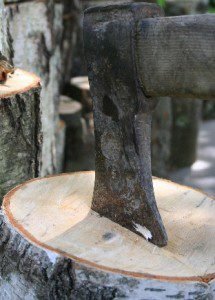
 It's a pleasure to read the Gospels, well, until you get to the end; the end is where Jesus was crucified, and it's much less pleasant to see Him experience the anguish of the redemptive sacrifice; but, He gets through it, and at the very end, everything is all right again. But before you get to the end of the story, you have time to savor different aspects of Jesus' life, including His words. He had a rather radical perspective on human relationships, and He said some pretty astonishing things. Take, for example, the case of the mote and the beam. That's an excellent title for a book: The Beam and the Mote.
Jesus said in Luke 6:41 “Why do you see the speck that is in your brother’s eye, but do not notice the log that is in your own eye? Or how can you say to your brother, ‘Brother, let me take out the speck that is in your eye,’ when you do not see the log that is in your own eye? You hypocrite, first take the log out of your own eye, and then you will see clearly to take out the speck that is in your brother’s eye.”
Ouch, not very gentle; but following these simple instructions will spare us a lot of divisions, troubles, and a lot of pain. Interestingly, Jesus acknowledges that this person is far from perfect; he does, after all, have a speck in his eye, and on that, we can hardly disagree. After all, not only do we tend to see all the speck in our neighbor's eye, we can describe it in minute detail by dint of gazing at it from time to time.
But where the problem lies is that Jesus goes further, while recognizing the shortcomings of others, he evokes the strong possibility that we ourselves are worse than the people we criticize. Even more so He proposes a regimen of self-assessment and self-correction before even thinking about putting others in their place. These words are far from tender, but very apt, given that we are so prone to denigrate, criticize, and complain about others in the confidence of our own virtue. As a pastor, one cannot help but notice in humans a strong propensity to minutely diagnose the microscopic flaws of others while assiduously ignoring our own gargantuan inadequacies.
This is serious business, refusing to face our own failings and constantly pointing the finger at others can only make us deeply unhappy. Everyone must face their own shortcomings; because even if others are wrong, they are not likely to change to make you happy, only you can change to make yourself happy. It is all a question of repentance, we cannot experience profound transformation if we continue to offer justifications for our behavior while flogging others for actions that are far less reprehensible than our own. When people turn to me to complain about real or imagined slights, my response is simple, FORGIVE; for some, this is ancient Greek, incomprehensible. They prefer to cherish their pain, hold it to their chest and find comfort in it. So be it.
But it's worth remembering that everyone probably has flaws they're unaware of, that others see and don't appreciate. You may not be as magnificent as you've always thought. When others look at you, they may be faced with a log. To receive mercy, it's important to exercise mercy. The Master's way is to forgive, let go, and start again. That's what He said in the verses before the illustration of the log and the speck. The Master's way is to get our own lives in order before we turn our attention to others. Shalom!




 English (UK)
  Français
I had the opportunity again today to remove the log from my eye while I was trying to remove the speck from my neighbor. It took me a while to understand that I was wrong, but praise God for his immense kindness and my neighbor's patience. It was only when I decided to repent that I understood that I had done wrong. Then joy filled me and my relationship with my neighbor is even better than before. May God give me the grace to always acknowledge my faults, because that is one of the keys to life!